Several overseas NIO owners start searching for a NIO software repair service after experiencing infotainment freezes, black screens, NOMI voice assistant failures, charging communication problems, ADAS unavailable warnings, or unstable app synchronization after OTA updates, long parking periods, or low-voltage restart conditions.
In many situations, the warning itself does not immediately confirm hardware failure. Some NIO ES6 black screen issues still maintain background communication. Certain NIO ET5 NOMI problems are linked to infotainment instability rather than failed modules. Some NIO ET7 ADAS warnings appear temporarily after interrupted calibration or delayed sensor synchronization.
The first step is not blind part replacement. The first step is separating software behavior, vehicle network status, module communication, calibration conditions, and real hardware damage before choosing the repair route.

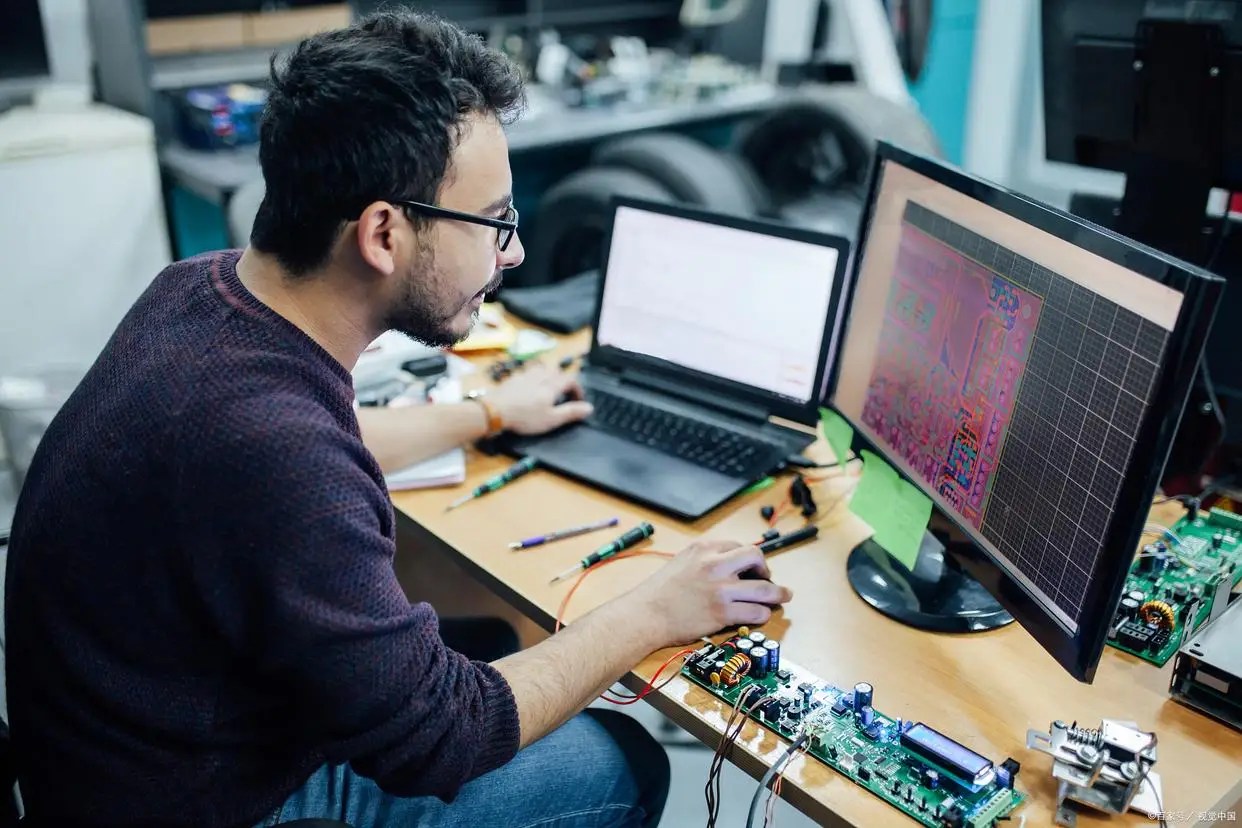
Suggested image: NIO dashboard warning, remote diagnostic setup, or engineer checking EV software.
Clear service boundary: this is not a promise that every NIO fault can be fixed remotely. We first check whether the problem is software-related, network-related, calibration-related, module-related, or caused by damaged hardware.
NIO Software Repair Service: First Check Before Replacing Parts
A warning message does not always mean a broken part. Some NIO faults appear after an OTA update, long parking, low-voltage condition, weak vehicle network, app sync problem, or module communication delay.
That is why we do not start by guessing. We start with simple fault questions. The answers usually tell us whether remote diagnosis has value or whether the car should go straight to a local workshop.
Before asking for repair, check these points
- Did the fault start after an OTA update?
- Did it appear after charging, jump-starting, or long parking?
- Does the warning show only after startup?
- Is the screen black, frozen, slow, or restarting?
- Can the NIO app still connect to the vehicle?
- Is NOMI alone not responding, or is the whole infotainment system frozen?
- Was there water damage, collision, battery drain, or recent part replacement?
These questions help separate a recoverable software or communication fault from a physical hardware problem.
How NIO Software Problems Usually Start
A high-trust NIO software repair service should explain how the fault develops, not only list the warning message. Many software-related NIO problems start with small signs such as delayed screen response, unstable app connection, slow NOMI reaction, or a warning that appears only after startup.
The fault may then move into repeated infotainment restart, temporary black screen, charging communication delay, ADAS unavailable warning, BMS message, Bluetooth key instability, or a vehicle offline state in the NIO app. This does not automatically prove that a control unit is broken.
| Fault Stage | What Owners Usually Notice | Possible Diagnostic Direction |
|---|---|---|
| Early Stage | Slow infotainment response, delayed NOMI reaction, unstable app connection | Software synchronization delay or temporary communication instability |
| Middle Stage | Random reboot, temporary black screen, OTA interruption behavior | OTA recovery issue, unstable module communication, software recovery state |
| Advanced Stage | ADAS unavailable warning, charging communication problem, multiple fault messages | CAN communication instability, calibration mismatch, network-layer fault |
| Hardware Risk Stage | Permanent black screen, no module response, offline sensors, no visible recovery behavior | Possible hardware damage, failed power delivery, or failed control unit |
What Usually Causes NIO Software Problems?
A professional NIO software repair service should first identify the trigger condition behind the warning behavior. Many NIO software problems are linked to power conditions, OTA interruptions, communication instability, calibration mismatch, or delayed module wake-up rather than immediate hardware failure.
- Interrupted OTA updates
- Low-voltage restart conditions
- Long-term parking without stable auxiliary battery voltage
- Temporary CAN communication instability
- Vehicle network synchronization timeout
- Sensor calibration mismatch
- Infotainment communication failure
- Delayed module wake-up behavior
- Regional software environment differences outside China
- App synchronization or T-BOX communication instability
Real Symptoms Seen in Overseas NIO Vehicles
Some overseas NIO owners report that infotainment instability starts after the vehicle remains parked for several weeks with low auxiliary battery voltage. In certain situations, the vehicle can still drive normally while the center screen, NOMI system, Bluetooth key, or app synchronization becomes unstable.
Other owners search for NIO software repair service after OTA interruptions where the system enters repeated restart loops, temporary black screen conditions, delayed charging communication, or multiple warning messages appearing at the same time.
A single warning message is not enough to confirm hardware failure. The relationship between OTA behavior, module response, communication status, app synchronization, and warning timing often reveals a more useful diagnostic direction.
How FixMyDash Separates Software Faults from Hardware Damage
The purpose of this NIO software repair service is not to promise that every issue can be fixed remotely. The first goal is identifying whether the fault direction still points toward software behavior, communication instability, calibration problems, or irreversible hardware failure.
If the affected module still appears on the vehicle communication network, remote diagnostic review may still provide useful fault direction. If the module completely disappears from communication, the issue is more likely related to failed power delivery, damaged wiring, hardware failure, or a physically damaged control unit.
This separation process helps overseas NIO owners avoid unnecessary part replacement before understanding the real fault layer.
Common Search Situations Related to NIO Software Repair Service
- NIO ES6 black screen after OTA update
- NIO ET5 NOMI not responding
- NIO ET7 ADAS unavailable warning
- NIO ES8 charging communication fault
- NIO EC6 app connection issue
- NIO infotainment system restarting repeatedly
- NIO Bluetooth key instability
- NIO vehicle offline after long parking
- NIO BMS warning after low-voltage restart
- NIO multiple warning messages appearing together
FixMyDash NIO Fault Screening Method
This NIO software repair service uses a four-step screening method before any remote work starts. It keeps the service realistic and avoids unnecessary repair attempts when the case clearly points to hardware damage.
| Screening Step | Question We Check | Why It Matters |
|---|---|---|
| Step 1 | Is the vehicle online? | Remote diagnosis depends on whether the vehicle, app, or system can still communicate. |
| Step 2 | Is this likely software or hardware? | Software and communication faults may be checked remotely. Physical damage usually needs local inspection. |
| Step 3 | Is the affected module still responding? | If a module is completely dead, remote repair may not be possible. |
| Step 4 | Can we reset, guide, calibrate, or only diagnose? | Some cases can be handled remotely. Some can only be identified before local repair. |
Common NIO Model Problems We Can Review Remotely
These are common fault types where remote review may help. The goal is not to promise a fix in every case. The goal is to find the correct fault direction before parts are replaced.

Suggested image: dashboard warning, black screen, NOMI issue, app error, or charging fault screenshot.
| Fault Area | What the Owner May See | What We Check First |
|---|---|---|
| Infotainment System | NIO ES6 black screen, frozen screen, slow response, random restart | Software behavior, restart pattern, recovery possibility |
| NOMI Voice Assistant | NIO ET5 NOMI not responding, no command response, no voice feedback | Voice service, audio path, infotainment communication |
| ADAS / NOP Warning | NIO ET7 ADAS warning, NOP unavailable, radar or camera warning, false alerts | Warning history, calibration direction, visible sensor damage |
| Battery / Charging | NIO ES8 charging fault, range display error, BMS warning, slow charging message | BMS symptom pattern, charging logic, software vs hardware direction |
| App / Vehicle Network | NIO EC6 app connection problem, Bluetooth key unstable, UWB key issue | Vehicle online status, T-BOX behavior, app communication |
| Suspension / Chassis Warning | NIO EC7 chassis warning, air suspension warning, abnormal height | Calibration direction, module response, hardware damage signs |
Which NIO Models May Need This Type of Diagnosis?
Remote diagnostic review may apply to different NIO models depending on software version, vehicle online status, available access, and fault type. A model name alone is not enough. The actual symptom matters more.
For example, a NIO ES6 black screen, a NIO ET5 NOMI issue, a NIO ES8 charging fault, or a NIO ET7 ADAS warning may look similar to a hardware failure at first. In practice, the next step depends on the warning history, module response, vehicle network condition, and whether the affected system is still communicating.
We do not claim that every fault on every NIO model can be repaired remotely. We first check whether the case is suitable.
Before starting remote diagnosis: purchase the remote diagnostic service first. After the order is placed, send your NIO model, warning photos, app screenshots, and a short fault video. We will review the case and confirm the next step.
If the problem clearly points to physical hardware damage, we will tell you directly instead of pushing an unnecessary remote repair.
How Our NIO Software Repair Service Works

Suggested image: engineer using remote diagnostic computer, remote support setup, or service workflow.
Buy the Diagnostic Service
Place the order first so we can start the case review under a clear service record.
Send the Vehicle Details
Send the NIO model, model year, country, fault photos, screen video, app screenshots, and when the issue started.
We Check If Remote Diagnosis Makes Sense
We look for signs of software, network, calibration, module response, or obvious physical damage.
Prepare the Car and App
Keep the vehicle parked safely, keep the app available, and avoid moving the vehicle during checking unless instructed.
Attempt Remote Support Where Possible
If suitable, we may guide software reset, recovery steps, communication reset, calibration direction, or fault separation.
Verify the Result
After the work, you test the screen, NOMI, app connection, charging, ADAS warnings, and dashboard messages again.
What You Need to Send Before We Check the Case
For NIO software repair service, good information saves time. A clear photo or short video is usually more useful than a long written description.
- Order number after purchasing the diagnostic service
- NIO model and model year
- VIN if available
- Country or region where the car is located
- Dashboard warning photos
- Center screen photos or videos
- NIO app status screenshots
- When the fault first appeared
- Whether the vehicle recently had an OTA update
- Whether the vehicle can still connect to the network
What Can Be Checked Remotely and What Usually Cannot?

Suggested image: software vs hardware comparison, module communication chart, or diagnostic decision graphic.
May Be Suitable for Remote Review
Screen freezing, NOMI issues, app connection failures, warning after OTA update, some calibration warnings, and some communication faults.
Usually Needs Local Inspection
Broken radar, damaged camera, water-damaged module, battery cell failure, wiring damage, dead sensors, or dead control units.
Diagnosis Still Helps
Even if remote repair is not possible, knowing the likely fault area can stop blind part replacement.
Issues that may be suitable for remote review
- NIO ES6 black screen or frozen infotainment system
- NIO ET5 NOMI not responding
- NIO EC6 app connection problem
- Bluetooth or UWB key instability
- Warning after OTA update
- NIO ET7 ADAS warning or NOP unavailable message
- NIO ES8 charging fault or BMS warning
- Some calibration-related warning messages
Issues that usually need local inspection
- Broken radar
- Damaged camera
- Water-damaged control module
- Battery cell failure
- Wiring harness damage
- Physically damaged sensors
- Completely dead control units
- Mechanical pump, valve, actuator, or suspension component failure
Remote diagnosis can often show whether the next step should be software support or local hardware inspection. That alone can save time and avoid the wrong repair route.
Why FixMyDash Handles This Differently
Many overseas NIO owners face the same problem: the car is outside China, but the software logic, app ecosystem, diagnostic path, and module behavior may still follow the China-market system.
We focus on separating the fault layer before giving a repair direction. This matters when a NIO ET5T BMS warning, a NIO ES7 network issue, or a NIO EC7 chassis warning appears after software changes, battery drain, or long parking.
Software or Hardware?
We do not treat every warning as a broken part.
Network or Module?
App failure, T-BOX status, vehicle online condition, and module response are checked separately.
Repair or Diagnose Only?
Some cases can be handled remotely. Some can only be diagnosed before local work.
FixMyDash principle: diagnose first, replace parts last.
Is Your NIO Suitable for Remote Diagnosis?
Your NIO may be suitable for remote review if the vehicle can still power on, the system can still show warnings, the app may still communicate, or the fault appeared after software, charging, network, or system changes.
- The center screen is black, frozen, or slow.
- NOMI does not respond correctly.
- The NIO app cannot connect to the vehicle.
- The fault appeared after an OTA update.
- The vehicle shows charging or BMS-related warnings.
- The ADAS or NOP warning appears without visible collision or sensor damage.
- The vehicle behaves abnormally but can still power on.
If the car has water damage, broken wiring, a dead control unit, obvious collision damage, or battery cell failure, remote repair is usually not the right first repair method.
How to Request NIO Software Repair Service

Suggested image: WhatsApp support, email support, fault photos, app screenshots, or information checklist.
Purchase the remote diagnostic service first. Then send your NIO model, order number, VIN if available, country, warning screenshots, fault video, NIO app screenshots, and a short note explaining when the problem appears.
We will first check whether remote diagnosis makes sense. If it does, we will guide you through the next step.
Ready to Use NIO Software Repair Service?
Buy the NIO software repair service, then send your vehicle details and fault evidence. We will check whether the case can be handled remotely or whether local inspection is more realistic.
FAQ About NIO Software Repair Service
Why does NIO show ADAS unavailable after an OTA update?
ADAS unavailable warnings may appear after an OTA update when calibration data, radar communication, camera status, or vehicle network synchronization has not fully recovered. If there is no visible sensor damage, a NIO software repair service can help review whether the problem looks like a software, calibration, or communication issue before local hardware replacement.
Why does the NIO app lose connection after long parking?
Long parking can create low-voltage or network wake-up problems. The vehicle may still drive, but the app may show offline status, delayed synchronization, or unstable remote control. The first check is whether the vehicle network, T-BOX communication, and app synchronization are still responding.
Why does NOMI stop responding after infotainment restart?
NOMI may stop responding when the infotainment system is slow, the audio path is unstable, the voice service is delayed, or module communication is interrupted. This does not always mean the NOMI hardware is damaged. The symptom timing and screen behavior matter more than the warning alone.
Why does a NIO black screen still play audio?
If the screen is black but audio, warning sounds, or background functions still work, the infotainment system may not be completely dead. This can point to display output, software state, boot behavior, or module communication rather than full hardware failure. Clear video evidence is needed before judging the repair direction.
Why do multiple warning messages appear at the same time?
Multiple warnings can appear together when a central communication layer, power condition, CAN network, or software synchronization process becomes unstable. It does not always mean every listed component has failed. A structured diagnosis should identify the first fault layer before replacing parts.
How do I know if my NIO problem is software or hardware?
If the fault appeared after OTA update, low-voltage restart, long parking, app disconnection, or temporary screen freezing, software or communication review may help. If there is water damage, collision damage, broken wiring, a dead sensor, or a control unit that no longer communicates, local inspection is usually required.
Can NIO software repair service fix every fault remotely?
No. Remote service can help review software behavior, app status, module response, communication conditions, and some calibration-related symptoms. It cannot repair damaged sensors, broken wiring, battery cell failure, water-damaged control units, or physically failed hardware.
What should I send before requesting NIO software repair service?
Send the NIO model, model year, country, order number, dashboard warning photos, center screen video, NIO app screenshots, when the problem started, whether an OTA update happened recently, and whether the vehicle can still connect to the network.
What happens if remote repair is not suitable?
If the case clearly points to physical hardware damage, FixMyDash will tell you directly. Remote diagnosis may still help identify the likely fault area, so you can discuss the correct repair path with a local workshop instead of replacing parts blindly.
Why is fault separation important before replacing NIO parts?
Because a warning message can be triggered by software state, communication delay, calibration mismatch, power instability, or real hardware failure. Separating these layers first helps avoid expensive and unnecessary part replacement.